09/2026: GIFR Volunteer Newsletter!
Planting season is quickly approaching! Grow It Forward Restoration is gearing up for a busy fall. In this newsletter, you'll find exciting news about our 2026 Tree Drive, tree care tips,
Organization Updates
With Fall restoration planting approaching, we've received several inquiries for trees! We're working on the logistics of sourcing and delivering these trees to restoration organizations across Western Washington.
2026 GIFR Tree Drive - SOLD OUT!
After sending out notice of the 2026 GIFR Tree Drive, Gabe and Lea received an extremely exciting request from The Tulalip Tribe's Restoration, Acquisition and Stewardship Program; an offer to purchase all 10,500 of our trees!
About The Project
Most of these trees are bound for the Tualco Valley, just south of Monroe, WA where the Snoqualmie and Skykomish Rivers meet to form the Snohomish River. It's a beautiful stretch of watershed, and it's about to get a lot of help.
The projects taking root there span a few different salmon restoration approaches. Some focus on removing old fish passage barriers, swapping out culverts for pre-cast concrete bridges that let the stream behave more naturally, then reshaping the channel so it's ready for spawning and rearing salmon. Others target floodplain connectivity, digging new side channels to bring more water into the system and bringing historic spawning reaches back to life.
All of that work means a lot of disturbed ground, which is exactly where our trees come in. Once planted, they'll stabilize streambanks, shade the water to keep it cool, crowd out invasive plants, and eventually become the large wood that healthy rivers need. It's a slow-growing kind of restoration, but a lasting one.
Next Steps
Identify Ready Trees - Sept 1st to Sept 15th
A health check survery has gone out to all micronursery host that we believe are needed to fullfill this order. Please complete the survery ASAP!
Collect All the Trees - Oct 15th to Oct 23rd
Once we've identified all the trees we need, we'll start collecting them in a central location. The folks at Center for Urban Horticulture (CUH) have graciously offered some secure space for us to gather trees from ~105 micronurseries over the course of two weeks. We'll be working to connect hosts to truck drivers and gather all the needed trees in one place.
Please note; Lea and Gabe must be present when trees are dropped off! We do not want GIFR trees littered around the CUH. Please wait to receive a drop off window.
Deliver to Tulalip Tribe - Sat Oct 24th
Once all trees are collected, we'll have a caravan of trucks take all the trees up to the Tulalip Tribe on Saturday, October 24th.
Help us put the “drive” in Tree Drive
We’ll need volunteer truck drivers to help us collect and distribute trees. If you’re not already signed up, consider joining our volunteer driver list or send to a truck driver friend to sign-up!
Tree Lifecycle: Preparing for Fall
With Fall's cooler temperatures, your trees will soon begin entering winter dormancy. Here are a few tips for how the return of the cool, rainy weather will effect your micro-nursery.
Tapper Down + Stop Fertilizing
Reduce Watering Frequency
Watch Out for Soggy Roots!
Utilize the provided underlining or aquire a pallet to get your trees off the ground. This will not only help prevent disease, but will help them regulate root moisture in the face of the heavy winter rains.
Checking in on your tree's roots
Here is a simple tutorial video on how to look at the root of your trees without damaging them.
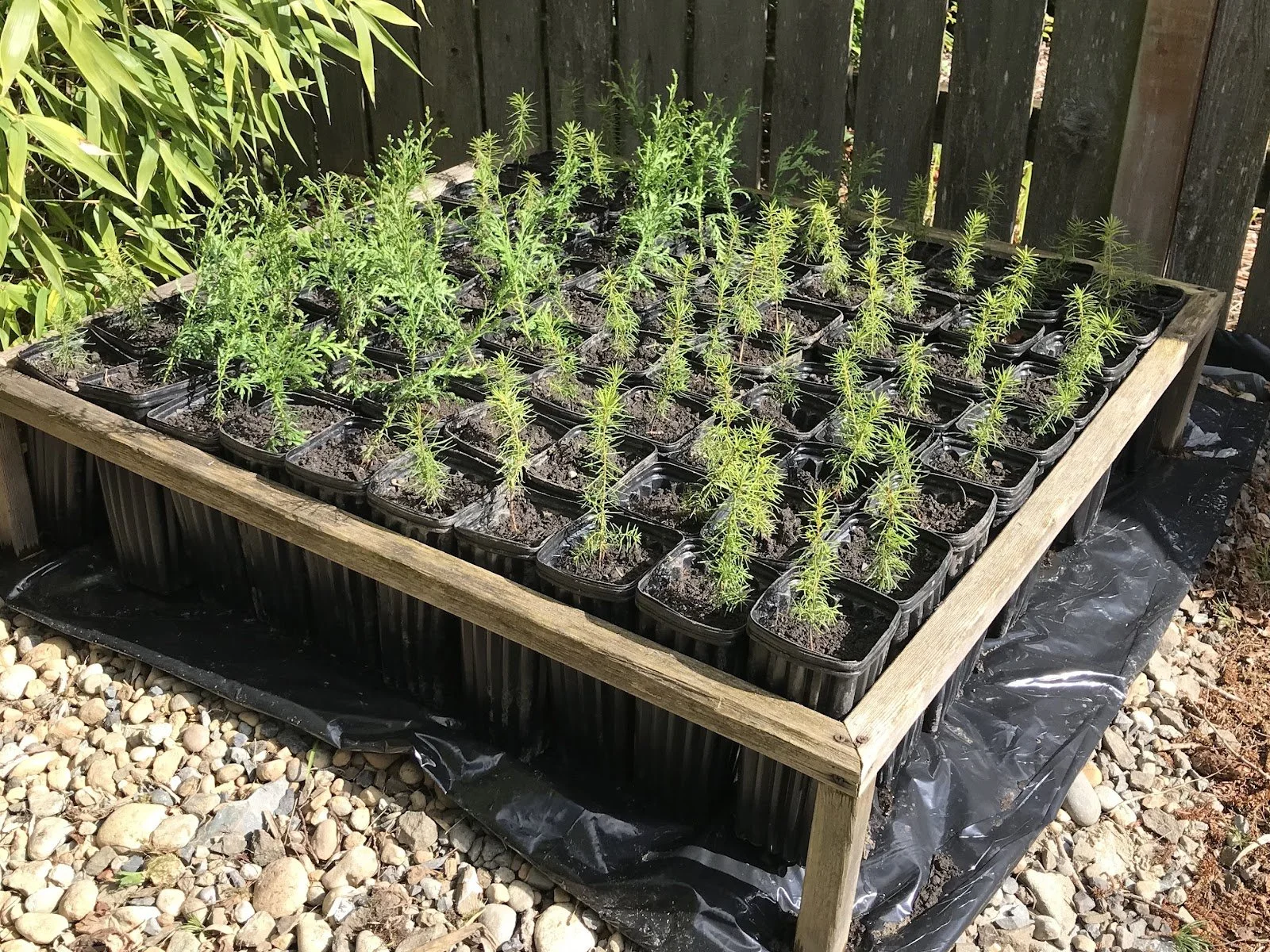
Tree Tip: Lift your trees!
Creating a gap between your trees and the ground can help keep roots healthy and prevent the spread of disease.
~ Send us a status update on your trees using our new tool! (not very mobile friendly right now) ~
Updates on 2023 Douglas Firs
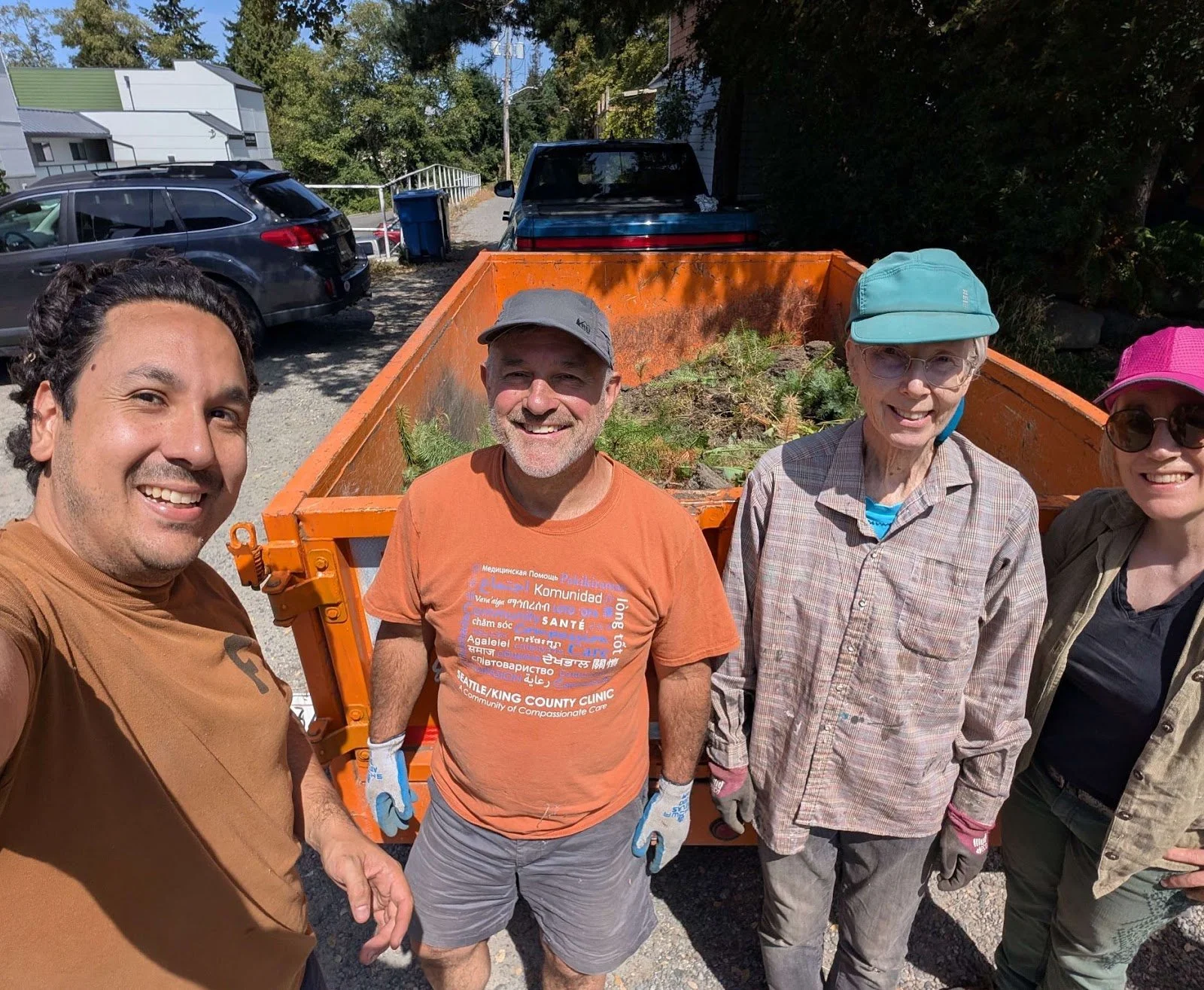
With the help of several volunteers, we culled the first round of impacted 2023 Douglas Firs. We have about 25 more micro-nurseries to recover trees from. As we are curently focusing on Fall order fullfillment, this recovery effort will resume in November 2026.
Emerald ash borer confirmed in WA
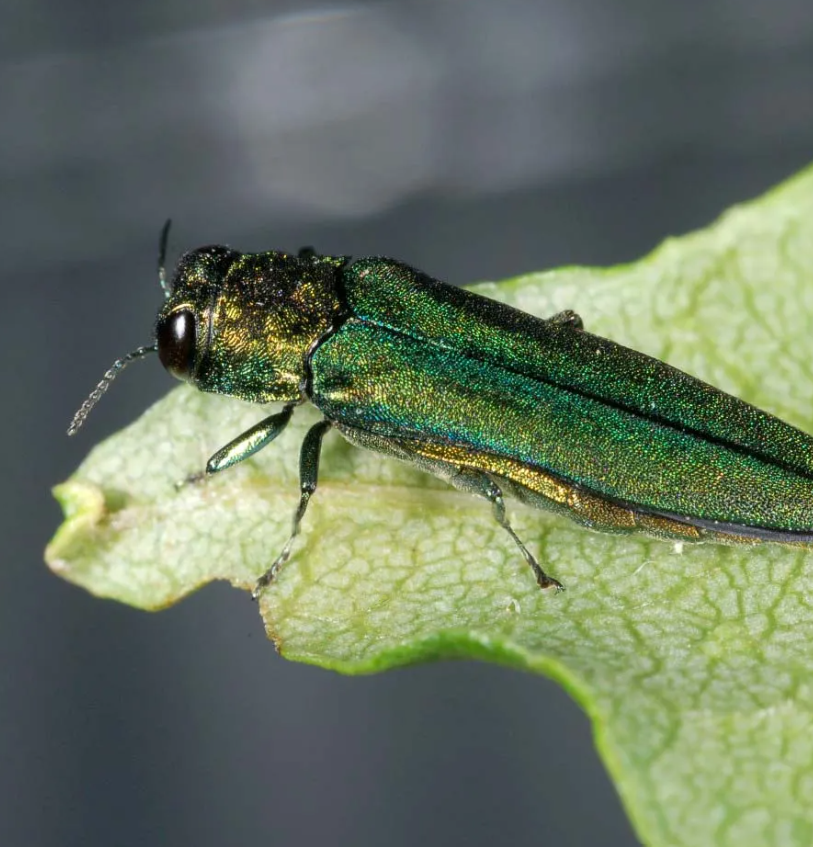
In August 2026, the Washington State Department of Agriculture (WSDA) and USDA's Animal and Plant Health Inspection Service (APHIS) confirmed a report of emerald ash borer (EAB) near Vancouver, WA — the first known detection in our state.
EAB is a small, invasive beetle, that has proven to be one of the most destructive forest pests in North America. According to a Washington State Department of Natural Resources (DNR) analysis, once an infestation takes hold, the state should expect to lose 90–100% of its ash trees (Fraxinus spp.) within 10–12 years.
Replacing that loss is going to take a lot of resilient, native plant material. Every native tree you grow with GIFR is a small but real step toward helping our forests recover from this coming shock.
Events from Partner Orgs
Where Do Native Bees go in the Winter? Webinar - WNPS Thursday, September 3rd at 7 pm (learn more)
Central Puget Sound: Nursery Work Parties - WNPS First Saturday of Each Month (learn more)
Evan's Meadow Restoration Work Party - City of Sammamish Saturday, September 12th from 11 am to 2 pm (learn more)
Beaver Pond Natural Area Work Party - Green Seattle Partnership Sunday, September 27th from 10 am to 12 pm (learn more)
Spoken Wild: The Wild Advantage Webinar - Stewardship Partner Wednesday, September 30th from 6 pm to 7 PM (learn more)
Fall Native Plant Festival - Oxbow Farm & Conservation Center Saturday, October 3rd (learn more)